This article may include affiliate links. If you click a link and make a purchase, Utah Outdoor Activities may receive a small commission at no extra cost to you. We only recommend products or services we personally use. FTC Affiliate Disclosure.
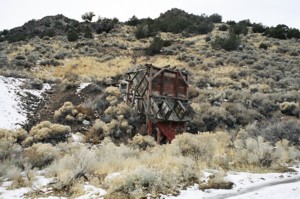
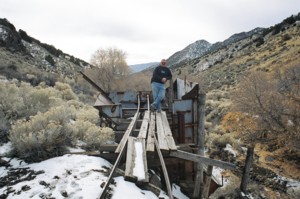
Located approx 90 miles from Salt Lake City, in Utah's west desert is Death Canyon. Littered with signs from Utah's mining past, makes this canyon a great place to visit and explore. We were amazed by the structures that were still standing today. There is an unknown number of mines in this canyon, so use caution when hiking around.
We discovered mine shafts that were hundreds of feet straight down into the earth. One fall into one of these shafts will surely bring DEATH. The structures and the mines were very fascinating to us because they were still in fairly good condition considering the age.
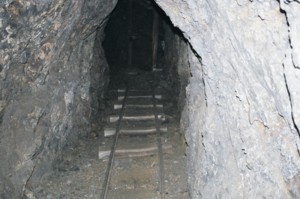
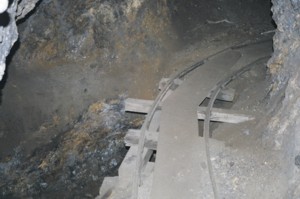
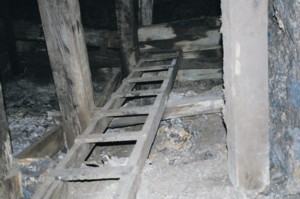
Some of the mines still have the rails that were used to carry the ore to the surface of the mine. There is not much history written on this area so it is unknown what the miners were mining for. We would have to guess Sliver and Gold. Most of the mines that we discovered were still open. Warning to anyone that visits this canyon. Going inside these mines is very, very dangerous. If you do venture into these mines you do so AT YOUR OWN RISK.
One area of the canyon showed us just how dangerous these mines can be, is located about 2 miles up the canyon. On the north side of the road an old mine has caved in. We went up to explore the area and there was a deep gorge that gave us a view into the depths of the mine. As you looked up the hill side you can see another section that has also caved in. This area was very unnerving, so for our safety we decided to exit the area.
As you travel further up the canyon the road turns into a stream bed. A small four wheel drive vehicle with high clearance or ATV's is recommend, if you plan to travel this far. If you do decide to continue up the canyon, the road splits off to the left and takes you to an old miners cabin. This cabin was in fair condition a few years ago, but has since been burnt down, WHAT A SHAME!
Be sure you are prepared if you decide to visit Death Canyon. You are a long way from services and help. Make sure to carry plenty of water, food, gas and a cell phone for those unexpected emergencies. There are a few ways to get to Death Canyon. We headed to Cedar Fort and continued west to Five Mile Pass. At Five Mile Pass you will take the first leg of the Pony Express Trail. Follow this road until you come to Faust and the T in the road. At the T turn left (south) toward Vernon, after about 1/2 mile you will head west on the second leg of the Pony Express Trail.
This section of the trail is paved for about six miles and then turns to dirt, which is still well maintained and traveled frequently. As you start the second leg of the Pony Express you are approximately 2 miles from Look Out Pass, once you go up and over Look Out Pass you will be about 16 to 17 miles to your next stop which will be Simpson Springs. From Simpson Springs keep heading west for approximately 3 miles until you come to a sign that says Indian Springs and Death Canyon, turn South on this road. Death Canyon is about 12 miles according to the sign. The only way you will know that you have reached the mouth of Death Canyon, is you need to watch for an old metal fence post that sits at a 45 degree angle pointing up a canyon road. When traveling up the canyon road watch for old mine works and a mine shaft on the right side of the road. This means that you have arrived at Death Canyon.
If you travel to this canyon, once again please remember to be prepared with all the necessary items for survival, and remember this place has mine shafts everywhere so watch your step, keep the kids close, and do not venture into the mines. By visiting Death Canyon you do so at your own risk, and Utah Outdoor Activities cannot be held responsible for damages that may occur. Be safe have fun and you will defiantly be talking about this adventure for a long time!
Update Submitted By Lisa Tonioli:
I grew up going to Death canyon once a month during the summer times, The old miners Cabin you talk about on your web-site was my families cabin my Grandfather Budd Tonioli built it along with my father and his brothers and there uncles. I am not sure when the cabin was built but I know up until 1990 there was a dirt floor, then in the summer of 1990 they put in a cement floor. My brother (Michael), cousin (Jason and Jeff) are etched in the ground of the cement.
The creek bed that you talked about we called the "gully" my grandfather made the road threw there so it would scare people away from going up further to where the cabin was. About a mile before the "gully" there was once another cabin. The family called the Rydolches once visited there quiet frequently we considered them the owners. One day the B.L.M found a cabins and told us we had to demolish them, they gave us until my grandfather died to use them. One week after he died (March 24th 1997) The B.L.M went up there and burned are favorite vacation place down, and as you see today they burned it and left the remains now it just looks horrible. We are trying to fight the B.L.M to rebuild our cabin but were having no luck. I just thought I would update and maybe help you with your information. Thank You!
Update Submitted by Matt Tonioli:
As Lisa stated the cabin was built by the Tonioli family. It was constructed in the Early 1970's and was a work in progress from there on out. A mile down the road was a cabin constructed by the Rydalches. Both of these cabins were used up until the BLM decided that they could possibly be a safe haven for drug smugglers, etc. Disregarding that this had never happened in the past and were regularly frequented by family, friends, scout troops, and even game wardens from time to time. Unfortunately, the director of the BLM at the time was myopic and thus the history of these cabins was erased and an embarrassing mess was left by the BLM. Both cabins were on a mining claim. At the mouth of the canyon sat some original cabins from the early 1900's, these historic cabins had weathered many years, but were also destroyed in the 1990's by the BLM in what we will call their destructive period. From talking with Budd Tonioli who had frequented the area from the 1950's and had talked to some of the old miners, they apparently were mining for Beryllium and other less common ores, not gold or silver.
 According to lore, the canyon was named death canyon, because apparently a large flash flood devastated a nomadic Indian tribe in the canyon and hence its name.
More Information:
Death Canyon is located in Simpson Mountain Range in Utah's West Desert. Active mining claims still exists in the canyon, so please obey and respect all private property.
Nearby Activities:
We hope you enjoyed this information. For more outdoor activities, please connect with us on YouTube, Facebook and Instagram. Help us keep this site up and running by visiting our online store which features outdoor themed gifts, decor and more. Thank you for visiting and for your ongoing support!