This article may include affiliate links. If you click a link and make a purchase, Utah Outdoor Activities may receive a small commission at no extra cost to you. We only recommend products or services we personally use. FTC Affiliate Disclosure.
Dinosaur National Monument protects a large deposit of fossil dinosaur bones--remains of the so-called "terrible lizards" that lived millions of years ago. The dinosaurs weren't really lizards, and most of them weren't even terrible. But some of the first dinosaur fossils ever found were huge bones and teeth, very lizard-like except for their size, and so the idea of monstrous lizards was born.
Today, many ideas about dinosaurs are changing, and the fossils at Dinosaur National Monument continue to help us learn more about these fascinating animals. The fossils that give the monument its name were discovered in 1909 by Earl Douglass. He was a paleontologist (a scientist who studies prehistoric life) who worked for the Carnegie Museum of Pittsburgh, Pennsylvania. Douglass knew that some of the rocks in northeastern Utah were the same kind that had produced dinosaur skeletons elsewhere, so he went there hoping to find more bones for the museum.
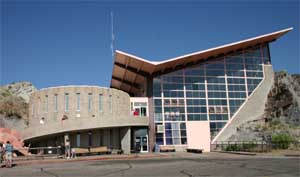
In fact, he found thousands of them, and spent many years digging them up and shipping them to Pittsburgh, where many skeletons are now on display. President Woodrow Wilson heard about the great dinosaur quarry that Douglass had started, and proclaimed the site as Dinosaur National Monument in 1915. Years later, the National Park Service began to develop the quarry as it is today. The rock layer containing the fossil bones forms one wall of the Quarry Visitor Center. On this wall, paleontologists have carefully chipped away the rock to uncover the bones and leave them in place. More than 1500 fossil bones can now be seen in this unusual exhibit.
There are several hiking trails that will let you experience the parks 210,000 acres. These trails will take you through some of the most rugged and some of the most beautiful canyon country in the west.
Location:
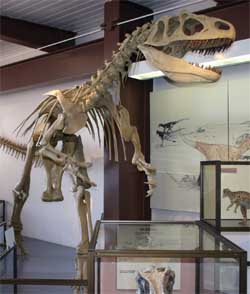
Dinosaur National Monument is located in both Colorado and Utah. Each state also provides a chance to visit very distinctive areas of the monument. The east side of the monument located in Colorado provides access to deep canyons along the Green and Yampa rivers. Dramatic views are available along the Harpers Corner Road. The west side of the monument located in Utah features the world-famous dinosaur quarry where visitors can see over 1,500 fossils still embedded in the cliff face.
Dinosaur Quarry Exhibit Hall and brand new Quarry Visitor Center, one-half mile from the Quarry, are now open. They are found by taking Highway 149 north from Jensen, UT to the park. Rangers lead visitors up to the Quarry by car caravans between October and April.
More Information:
National Park Service - Dinosaur National Monument
Nearby City:
Lodging:
Vernal Utah Hotels (Afflilate Link)
Other Points of Interest:
The Tilted Rocks Auto Tour - Dinosaur National Monument
Josie Morris Cabin - Dinosaur National Monument
We hope you enjoyed this information. For more outdoor activities, please connect with us on YouTube, Facebook and Instagram. Help us keep this site up and running by visiting our online store which features outdoor themed gifts, decor and more. Thank you for visiting and for your ongoing support!